

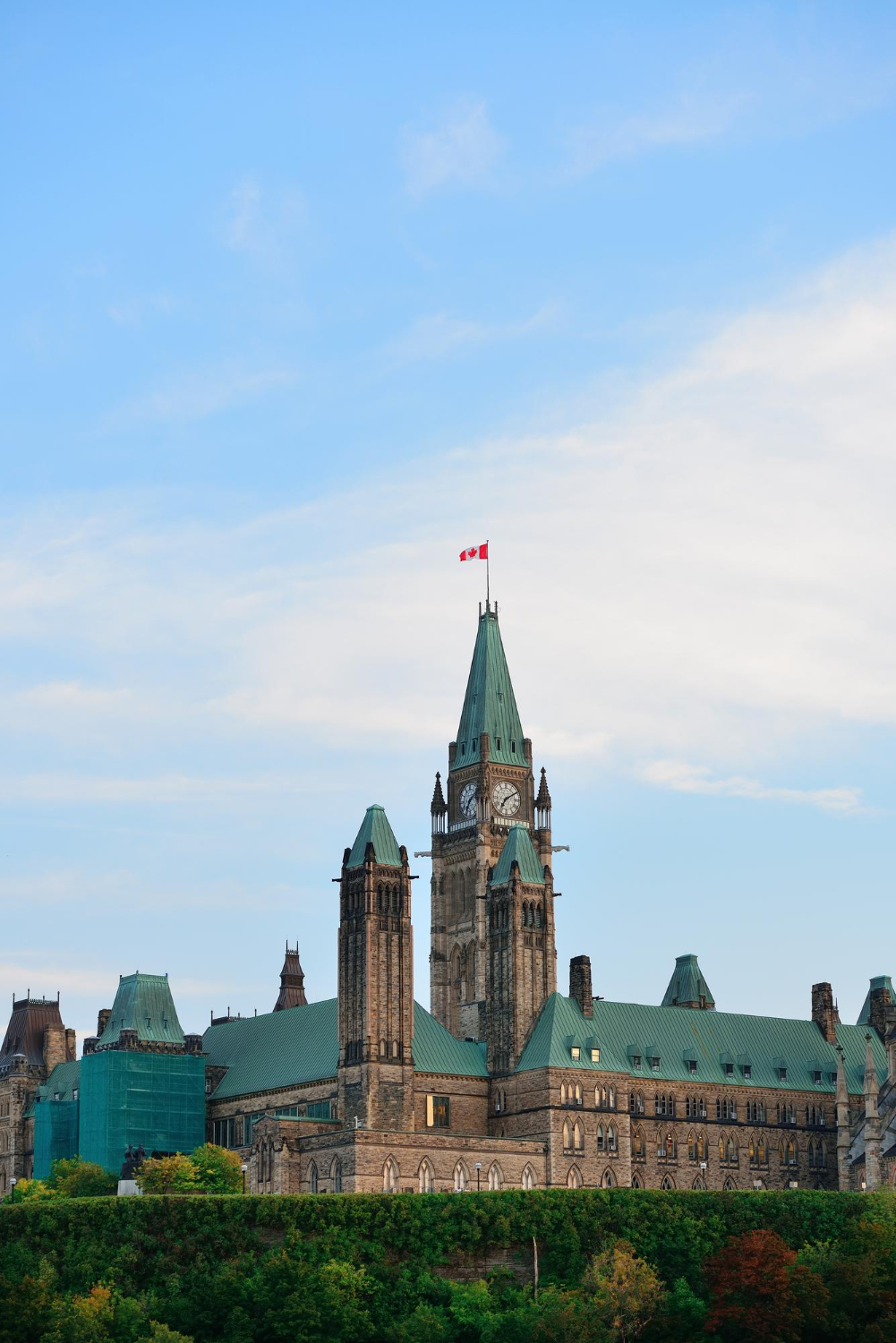
Canada’s education system is built on excellence, affordability, and a clear path toward professional growth and permanent residency.
Globally Ranked Institutions: Home to world-renowned universities like the University of Toronto, McGill, and UBC, Canada offers degrees that are respected by elite employers worldwide.
Post-Graduation Work Permit (PGWP): Graduates can work in Canada for up to 3 years, gaining invaluable international experience that serves as a direct bridge to Permanent Residency (PR).
Earn While You Learn: International students can work up to 24 hours per week during semesters and full-time during breaks, helping you manage your living costs independently.
High Quality of Life: Canada consistently ranks as one of the safest and most peaceful countries globally, offering top-notch healthcare and a vibrant multicultural mosaic.
Apply to a Canadian Designated Learning Institution (DLI) and secure your offer letter.
Achieve your target score in IELTS, PTE, or TOEFL to prove your English proficiency.
Receive your official Letter of Acceptance and required Provincial Attestation Letter.
Pay your first-year tuition fee and obtain a receipt to strengthen your visa file.
Organize bank statements or GIC (CAD 20,635+) to prove you can cover living costs.
Create an IRCC account, upload all documents, and pay the CAD 150 study permit fee.
Complete your medical exam and visit VFS Global in Kathmandu for biometrics.
Upon approval, submit your passport for stamping and prepare for your flight to Canada.
Gaining admission to a Canadian institution requires a strong academic foundation and a clear alignment between your past studies and future goals. Canadian universities are particularly focused on "Genuine Intent," looking for students who are academically prepared for their rigorous curriculum.
Academic Standing: For undergraduate programs, a minimum GPA of 2.8 to 3.0 is typically required. For Master’s, you need a 4-year Bachelor’s degree with a minimum "B" average (approx. 65%–70%).
Language Proficiency: A minimum IELTS score of 6.5 (with no band less than 6.0) or an equivalent PTE score of 58–60 is usually mandatory for most degree programs.
Program Alignment: You must demonstrate that your chosen course is a logical progression from your previous education or work experience to avoid visa refusals based on "vague study plans."
Subject Prerequisites: Many STEM or Business programs require specific high-school or college-level credits in Math or Science to be eligible for entry.
The documentation for Canada is highly specific, especially with the 2025 updates. Every document must be scanned clearly and, if not in English or French, must be accompanied by a certified translation.
Letter of Acceptance (LOA) & PAL: You must provide the original LOA from a DLI and the mandatory Provincial Attestation Letter (PAL) issued by the province.
Updated Proof of Funds: For applications in 2025, you must show at least CAD 22,895 for living expenses (outside Quebec), plus your first-year tuition and travel costs.
Guaranteed Investment Certificate (GIC): While not mandatory for all, a GIC of the required amount is the most "high-trust" way to demonstrate your financial liquidly to the visa officer.
Statement of Purpose (SOP): A detailed letter explaining why you chose Canada, your specific university, your financial plan, and your commitment to leaving Canada after your stay.
Medical & Police Clearance: A medical exam from an IRCC-approved panel physician and a Police Clearance Certificate (PCC) from Nepal are essential for health and security clearance.
Tuition
Living costs (per year)
Visa Processing
Expert SOP & PAL Guidance: We specialize in crafting high-impact Statements of Purpose (SOP) and managing the new Provincial Attestation Letter (PAL) requirements for 2025/2026.
Verified DLI Partnerships: We only partner with Designated Learning Institutions (DLIs), ensuring your degree is recognized and you remain eligible for work permits.
Financial Planning Experts: With Canada’s updated living cost requirement (approx. CAD 20,635), our team provides precise financial documentation support to ensure visa success.
Graduate-Level Specialization: For Master’s and PhD aspirants, we leverage the latest 2026 exemptions to provide a faster, PAL-exempt application pathway.


What Our Students Say About Us
Since Master's students are now PAL-exempt in 2026, Dream Next expedited my application and I got my study permit in record time!
The team helped me select a program that aligns with Canada’s 2023 labor shortage list, ensuring my PGWP eligibility was secure.
Opening my GIC with the new 2025 financial requirements ($20,635+) was daunting, but they walked me through every step.
The PAL is a mandatory document issued by the province where your school is located, confirming you are part of their student quota.
Need it: If you are applying for Undergraduate degrees, Diplomas, or Post-Graduate Certificates.
Exempt: As of January 1, 2026, all Master’s and Doctoral (PhD) students at public institutions are officially exempt from the PAL requirement and the national study permit cap. This makes the process much faster and easier for graduate applicants.
Canada significantly increased its cost-of-living requirement to ensure students aren't financially stressed. For 2026, single applicants must show:
Living Expenses: At least C$22,895 (approx. NPR 21–22 Lakhs) in a Guaranteed Investment Certificate (GIC).
Tuition: Proof of full payment for your first year of tuition.
Total: You should generally show a total liquid balance (GIC + Tuition) of roughly C$45,000 – C$55,000 to ensure a strong application.
Yes, PGWP eligibility is now more strictly tied to your field of study for certain levels:
University Graduates (Bachelor's, Master's, PhD): You remain eligible for a PGWP of up to 3 years regardless of your field of study.
College Diploma Graduates: To get a PGWP, your program must now align with Canada’s "Long-term Labour Shortage" list (e.g., Healthcare, STEM, Skilled Trades, or Agriculture).
Language Requirement: All 2026 PGWP applicants must now submit an approved English/French test score (e.g., CLB 7 for university grads or CLB 5 for college grads) to qualify.


